

When Stephanie Azzarello talks about her life today, she does so with a sense of gratitude that is impossible to miss.
The University of Toronto lecturer and art historian is back to teaching, traveling, and pursuing the work she loves. But just three years ago, her future looked very different.
A rare liver disease was destroying her health. Her body was failing. And without a living donor transplant, she knew she was running out of time.
What she didn't know was that an Oregon nurse named Trisha Beard would see her story online and feel compelled to act.
Today, their connection stands as a powerful example of compassion, determination, and the extraordinary impact nurses have both inside and outside the clinical setting.
A Life Built Around Learning and Adventure
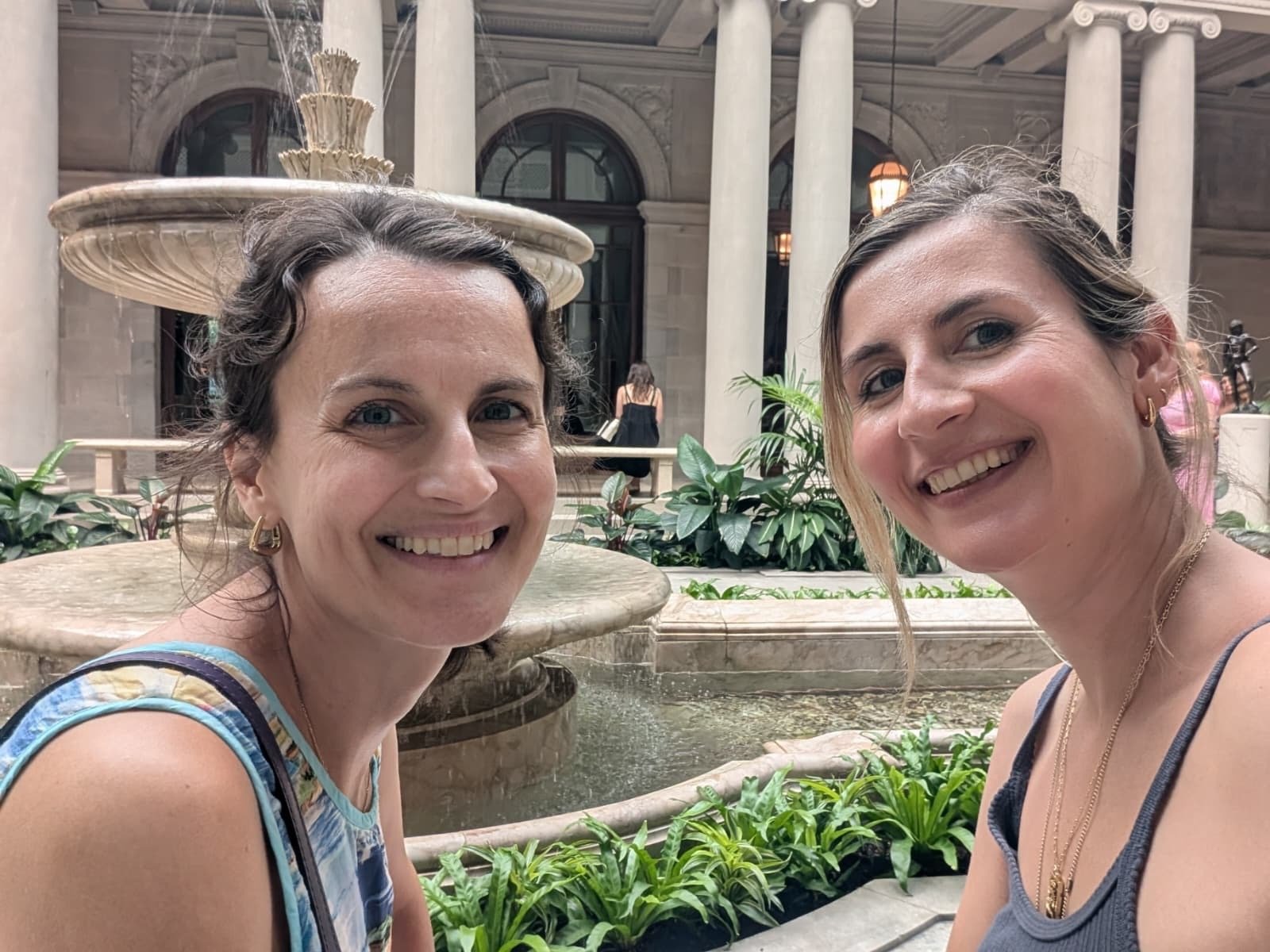
Born and raised in Toronto, Stephanie built an academic career studying and teaching art history. She earned her PhD, lived in England for nearly a decade, spent time in Italy, and traveled extensively while teaching and researching.
But alongside her academic accomplishments, Stephanie was quietly living with primary sclerosing cholangitis (PSC), a rare autoimmune liver disease with no cure and no effective treatment.
Her good health unexpectedly took a turn in 2012 when she developed sepsis and spent nearly a month hospitalized. After months of monitoring elevated liver enzymes and undergoing a liver biopsy, she received a life-changing diagnosis in December 2013.
"I remember the doctor said to me, 'We don't really know much about this and nobody's really looking into it,'" Stephanie says. "I was told there's no cure and there's no treatment."
For years, the disease remained relatively quiet. Stephanie continued working, studying, and living abroad. But beginning around 2019, her condition worsened dramatically. Recurrent infections, repeated hospitalizations, and hepatic encephalopathy began taking a devastating toll.
By June 2023, she was listed for a liver transplant.
"The itching was just unbearable," she said. "I was so jaundiced. I started getting ascites. I had constant nosebleeds. No digestive functions. That stopped."
Without a transplant, there was no path forward.
A Stranger on the Other Side of the Continent
More than 2,500 miles away, Trisha Beard, BSN, RN, was living a completely different life.
A nurse for 18 years, Trisha has spent her career caring for patients in cardiac nursing, medical-surgical nursing, case management, care coordination, and nursing education. Her desire to become a nurse began as a child after watching her grandparents navigate illness and the healthcare system.
"I've always wanted to help people and take care of people," she says.
At the time she encountered Stephanie's story, Beard was working in care coordination, raising two young children with her husband in Oregon, and balancing the demands of family and work. Her youngest child was not yet 18 months old and often kept her awake at night.
A Social Media Post That Changed Two Lives
Though Stephanie was extremely sick, her Model for End-Stage Liver Disease (MELD) score wasn’t high enough to receive a liver from a deceased donor. She needed a living liver donor, but finding one felt almost impossible.
"I'm not asking for directions. I'm asking someone to give me a vital organ. Where do you even begin with that?"
After creating a social media campaign and sharing her story publicly for the first time, friends and family began reposting her appeals. One of those posts was shared by a mutual friend, who had recently reconnected with Trisha.
Late one night while awake with her young child, Trisha saw Stephanie's story.
Immediately, several things stood out. She knew she shared Stephanie's blood type. They appeared similar in size and age. More importantly, she couldn't stop thinking about her.
"It started to gnaw at me a little bit," Trisha says. "I'm feeling a calling that keeps coming up."
When initial attempts to join the donor process stalled because she wasn’t Canadian, Trisha refused to give up. She continued searching for answers, submitting applications, and contacting the transplant program directly.
"I submitted the paperwork again in the middle of the night," she said. An hour later, she received a call from the transplant team in Toronto.
More Than a Match
The testing results were remarkable.
Not only were Trisha and Stephanie compatible blood type matches, they were an exceptional anatomical match as well. Physicians discovered Trisha had an uncommon vascular configuration that made living donation unusually well suited for Stephanie's transplant. Her liver also contained almost no fat, making it ideal for donation.
According to Stephanie, the surgical team told Trisha that she had essentially been "born to do this."
Before the operation, the two women connected almost daily through texts, phone calls, and FaceTime conversations.
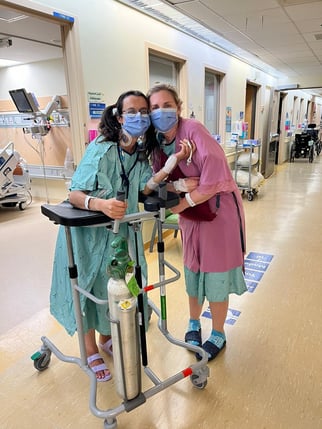
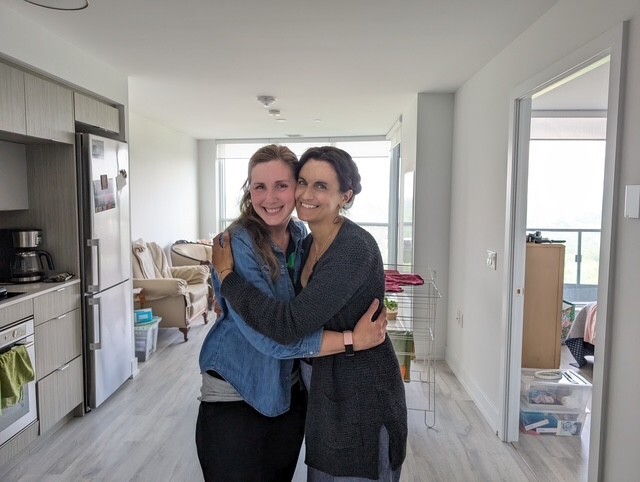
When they finally met in person at Toronto General Hospital, Stephanie was gravely ill.
"I wanted to hug her, but I wanted to look at her because I thought, she's real," Stephanie recalled. "This person that I've spent months dreaming about is real. She's right there."
After years of living with a progressive liver disease, Stephanie had grown accustomed to watching her world shrink. The relentless itching, recurrent infections, cognitive decline, and exhaustion had gradually stolen pieces of her independence and identity. By the time transplant became her only option, she knew she was running out of time.
The Impact of a Gift Beyond Measure
On June 12, 2024, Trisha donated 62% of her liver to Stephanie.
When Stephanie woke up after surgery, one of her first thoughts was not about pain or recovery.
"The first thing I checked for was, am I itchy?" Stephanie says. "And I remember thinking, I'm not itchy."
After nearly 15 years of constant discomfort, the symptom that had defined so much of her daily life had disappeared.
The other changes came quickly as well. Her jaundice began fading almost immediately. The mental fog caused by hepatic encephalopathy lifted. For the first time in years, she could think clearly, sleep normally, and imagine a future that wasn't defined by illness.
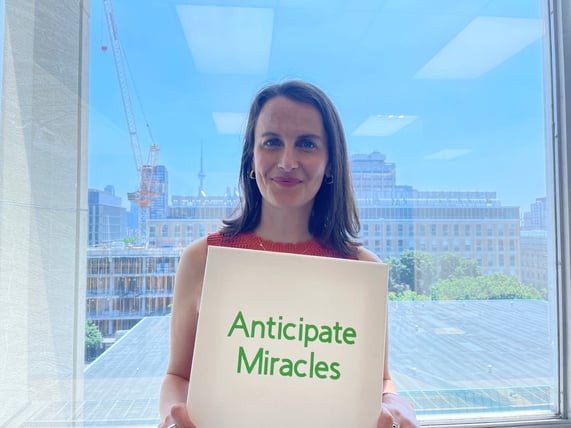
By September, only a few months after transplant, she was back teaching at the University of Toronto. Now, just over two years later, she is once again traveling, working, and thriving.
"I get to do the things I love because of an American nurse's extraordinary act of generosity," she says.
For Trisha, the emotional experience was equally profound, though very different.
Initially, she approached the process as a nurse who was faced with a problem she believed she could help solve. Someone needed a liver, and she could potentially provide one. But as the weeks passed and the two women spoke every day, the experience became deeply personal.
She learned about Stephanie's struggles. She witnessed, through daily conversations, the reality of someone living in end-stage liver failure. She became invested not just in the surgery's success, but in Stephanie's future.
After the transplant, watching Stephanie recover transformed the experience.
"I just feel really honored that it got to be me," Trisha says. "To witness her going from this very sick, your body is not working, to now she's thriving, it's incredible."
Trisha described feeling an unexpected sense of connection to the outcome, comparing it to the feeling of bringing new life into the world. Between being approved as a donor and the day of surgery, she became intensely protective of her health and her body because she knew someone else's future depended on it.
Their bond did not end in the operating room.
What began as a social media post became a friendship rooted in gratitude, trust, and shared purpose. They remain connected, celebrating milestones that once seemed impossible.
For Stephanie, the transplant restored her health. For Trisha, it reinforced the values that drew her to nursing in the first place: compassion, service, and the belief that when someone is in need, action matters. Together, their story is a reminder that healing is not only physical. Sometimes, it creates lifelong human connections that change everyone involved.
How has a nurse impacted your life? Share your story at ThePowerOfNurses.org.