


In the second grade, a teacher brought an inflatable planetarium to Starr Corbin’s, MSN, RN, class, giving Starr her first glimpse of the universe beyond Earth. This experience sparked a fascination with space that never went away.
At the time, she had no idea where that curiosity might lead. She would go on to become a nurse, caring for patients in intensive care units and emergency departments. But years later, that childhood interest would lead her to study spaceflight physiology, participate in research involving microgravity, and put on a spacesuit for the first time.
Starr is working to help establish a place for nurses in space exploration. She founded the Space Medicine Nursing Research Consortium (SMNRC) to connect nurses interested in the field, advance research, and expand opportunities for nurses in space medicine. After NASA recently announced a new pathway for nurses with certain advanced degrees to apply to become astronauts, she began considering a possibility that once seemed out of reach.
What does nursing have to do with space?
Spaceflight presents a unique set of challenges for human health. In microgravity, the body begins to change. Muscles can weaken, cardiovascular function shifts, and astronauts must adapt to an environment where their physiological processes work differently. Long missions bring challenges related to isolation, confinement, fatigue, and mental health.
Many of these challenges have parallels in nursing.
Throughout her career, Starr has worked in high-pressure clinical environments where nurses must make critical decisions and work efficiently as part of a team. She’s worked shifts in windowless emergency rooms, and gone days without seeing sunlight.
Those experiences have given her an appreciation for the importance of cognitive readiness – the ability to think clearly, make sound decisions and maintain performance even under physically and mentally demanding conditions.
“Our ability to maintain cognitive readiness after three 12-hour shifts, when you're back there on your fourth day or your fourth night in a row and you're exhausted is something nurses understand,” Starr said.
That knowledge can translate to spaceflight, where fatigue, confined working environments, and the demands of extended missions can affect human performance and safety.
Nurses also bring an understanding of human physiology that can inform how spacecraft and other systems are designed. Knowing how the body functions on Earth provides a foundation for understanding what changes in microgravity and how those changes can be managed.
The intersection of clinical knowledge, research, and experience makes Starr believe nurses are particularly relevant to the future of space exploration.
Finding her way into space medicine
Starr didn't always envision a career in aerospace. Growing up in a small town in southern Indiana, she originally wanted to become a teacher. Her interest in nursing came later, after spending a week in the hospital as a teenager. The pediatric nurses who cared for her made a lasting impression. They treated her as an individual and helped her maintain a sense of dignity during a vulnerable time. That experience inspired her to pursue nursing.
Years later, Starr was living within driving distance of NASA's Goddard Space Flight Center in Greenbelt, Maryland. Every time she drove by Goddard, she wondered whether there might be a way to combine her professional experience with her interest in space.
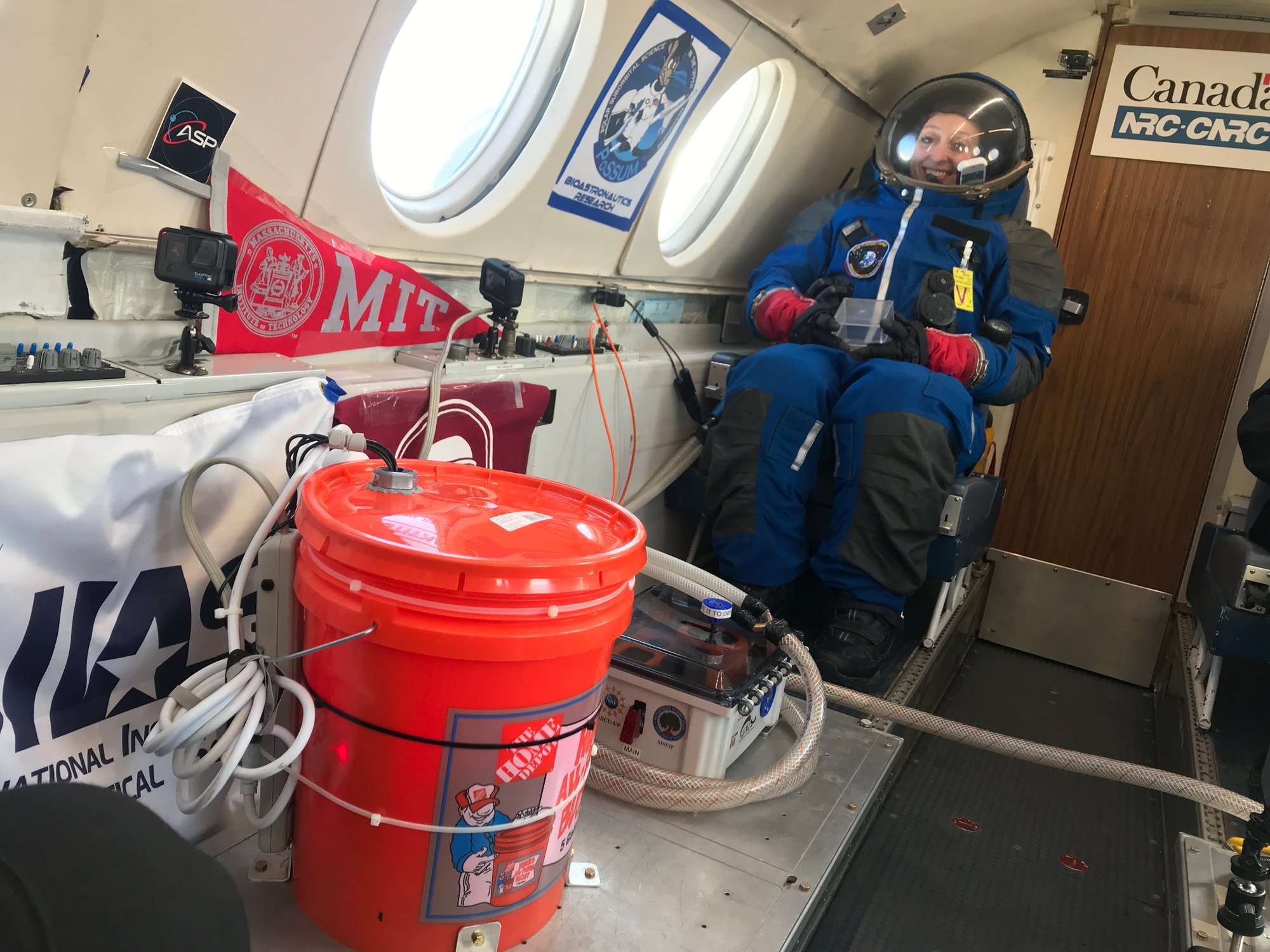
Starr started researching opportunities and discovered the International Institute for Astronautical Sciences, then known as Project PoSSUM. Through its bioastronautics courses, she began studying spaceflight physiology and learning how the human body responds to the space environment.
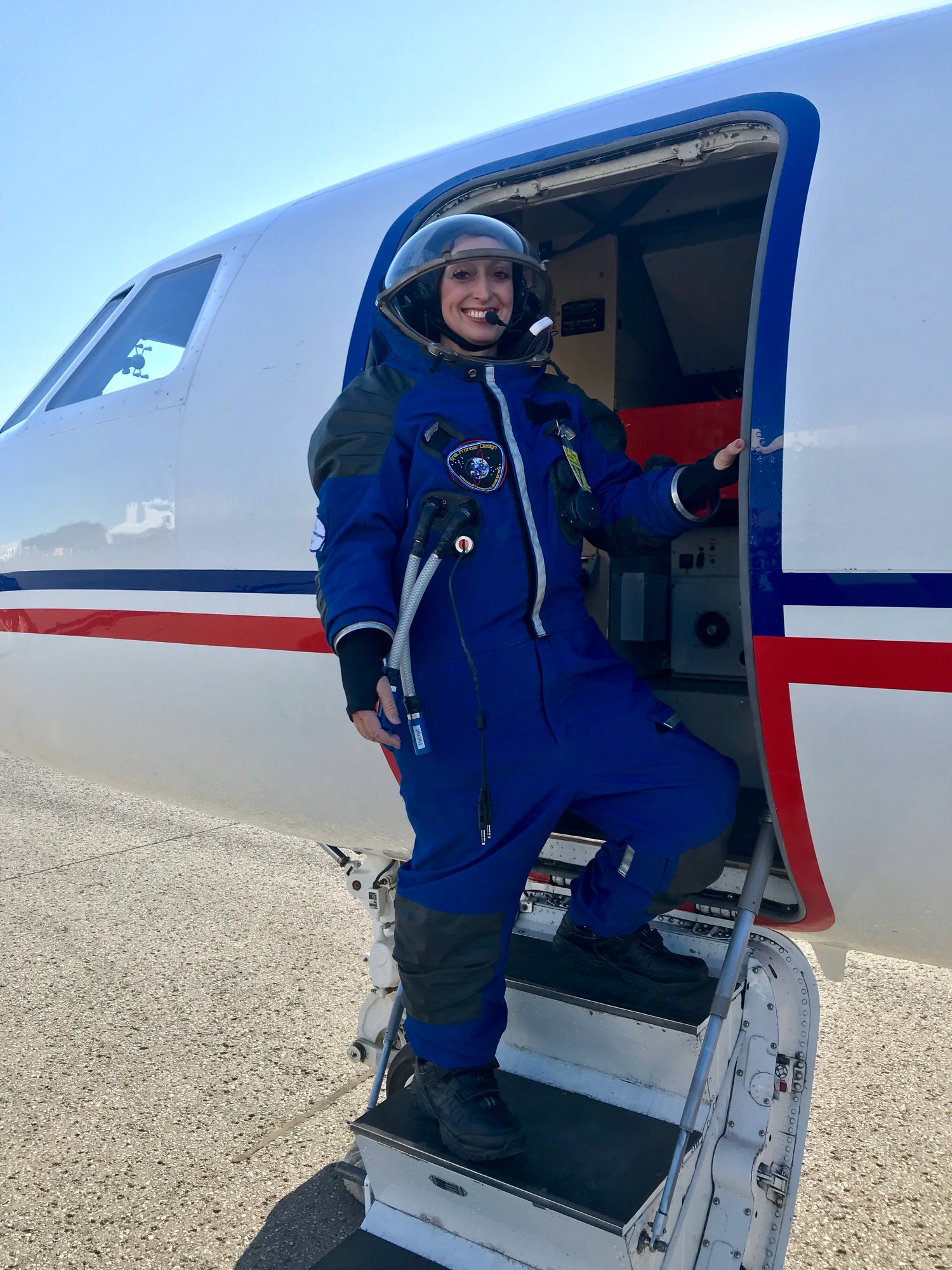
She eventually participated in human factors research, including parabolic flights that allow researchers to study conditions of microgravity. She also had the opportunity to wear a spacesuit for the first time.
“The first time I got into a spacesuit, I was hooked,” she recalled. “I was fascinated and in awe. And that honeymoon period never really went away.”
As she learned more about aerospace medicine, Starr began to see how her nursing background could contribute to the field. However, she noticed that nurses interested in space medicine lacked a centralized network to connect with one another, access research resources, and find opportunities to collaborate.
She decided to change that.
Building a community for space nursing
Starr founded the SMNRC to bring together nurses interested in advancing research and practice in the field of space medicine.
The idea grew from years of attending aerospace medicine conferences, meeting nurses working independently on related projects, and recognizing the need for a more coordinated effort.
Research, Starr explained, is essential to establishing credibility and demonstrating what nurses can contribute. She had experienced this firsthand in clinical settings, where changing a protocol often required presenting evidence and research to support the proposed change.
She wanted nurses entering aerospace medicine to have the resources and connections needed to do that work. SMNRC is working to create a centralized hub for education, research, and collaboration. Its goals include developing a library of spaceflight nursing resources, connecting nurses with research partners, helping researchers access opportunities to conduct studies in microgravity, and providing mentorship for those interested in the field.
The organization also hopes to expand educational opportunities and STEM outreach, helping introduce students and younger generations to the possibilities of space science and nursing.
Starr stresses that collaboration is central to making progress in space nursing.
“If you want to go far, go together,” she said, referencing a proverb that has become a guiding principle for the organization.
Starr has seen how nurses working toward a shared goal can accomplish more together than they could individually. She believes that collective effort is what will ultimately help establish nursing as an integral part of space exploration.
The benefits of space medicine on Earth
While caring for astronauts will be an important part of healthcare in space, Starr believes many of the technologies and approaches developed to support space medicine can benefit patients on Earth, particularly those who have limited access to healthcare.
Telehealth and remote monitoring are two examples. Providing medical care to people who are far from traditional healthcare facilities is a challenge both on Earth and in space. The technologies and practices needed to monitor astronauts and deliver care at a distance could also help nurses reach patients in rural communities.
Mental health is another area of opportunity. During a mission to Mars, for example, astronauts could spend months in a confined environment with the same small group of people, without the ability to step outside or experience the familiar surroundings of Earth. Starr points to emerging virtual reality technologies that incorporate immersive environments and sensory experiences as one way to help address isolation. Similar approaches could benefit people who are housebound or experience seasonal depression.
A new frontier for nursing
Starr wasn’t expecting NASA to announce that nurses with certain advanced degrees could apply to become astronauts. She had just told her team she was logging off for a few days when she came across the announcement. Soon, messages began arriving from colleagues across the country. Some nurses were so moved by the news they called her crying.
The announcement represented more than new career opportunities for nurses. Nurses have been working for decades to establish their place in the spaceflight industry.
“It was a feeling of being seen, a feeling of gratitude, honestly,” Starr said of her reaction to the announcement. “We were all so grateful to be seen for our potential.”
Starr plans to apply to become an astronaut, an opportunity she says she never imagined when she first became a nurse. But whether she’s selected, another nurse is, or no nurse is during this round of applications, she views the announcement as a milestone for the profession.
The future of nursing in space isn't about one person reaching a new frontier. It's about a profession bringing together its collective knowledge and experience to make something possible that once seemed out of reach.
Nurses’ abilities are diverse, their contributions are far-reaching, and when they work together, there's very little they can't accomplish.
How has a nurse impacted your life? Share your story at ThePowerOfNurses.org.