


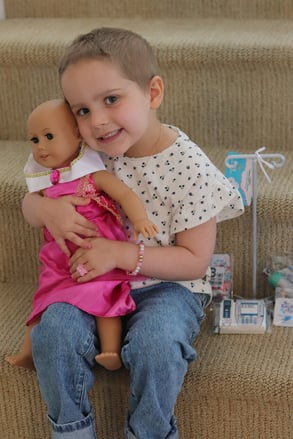
When Josie McLaren plays with her doll, she becomes a nurse.
She prepares the doll for chemotherapy, cleaning her port, ensuring she drinks water, and explaining each step. When the doll cries, Josie comforts her. She speaks gently and reassures her doll that she’s going to “kick cancer’s butt.”
Josie is only three years old. But she learned all this and more from the nurses caring for her.
A Childhood Interrupted
Before her diagnosis, Josie was what her mother, McLaren Jewell, describes as a “standard girly girl.”
She loved princess concerts in the living room. She sang with her parents when they played guitar. She adored doing her hair, playing dress-up, and coloring.
However, during a family trip abroad in 2025, McLaren noticed her oldest daughter wasn’t her usual self.
Josie looked unusually pale. At first, her parents attributed it to jetlag and a lingering ear infection. But when they returned home and visited the pediatrician, a test revealed that Josie’s hemoglobin level was dangerously low.
What followed were weeks of uncertainty, hospital visits, and more tests. Eventually, Josie was diagnosed with leukemia.
“It’s one of those moments where you think this happens to someone else,” McLaren said. “You hope and pray she’s going to be okay.”
Medical Trauma
The early days of Josie’s diagnosis were chaotic. A rural clinic where Josie first received blood draws used a controversial technique called bundling. The experience left Josie disoriented, frightened, and with severe medical trauma. Transferring to a new hospital for cancer treatment was a necessity, but terrifying for the Jewell family.
“The first time I walked into the cancer clinic, I panicked,” McLaren recalls. “I didn’t want to look around or make eye contact with anyone.”
Now, that same place is a comfort to McLaren, and a place where she “can just be.”
“A huge part of that is the nurses,” she says. “When we walk in, it feels like seeing friends.”
Pediatric nurses did more than deliver treatment. They built relationships with Josie week after week. Some wore playful dog ears to make her laugh. Others introduced themselves with silly nicknames like “Anna Banana.” They let Josie push the flush on her IV or help with small parts of her care.
Those moments transformed a place filled with fear into a place where Josie felt safe.
“It's not just a job,” McLaren said. “They prioritize her thoughts and feelings instead of the task.”
What a Doll Can Teach Us About Nursing
One day at home, Josie picked up a medical play doll and began acting out what she experiences during treatment.
She carefully cleaned the doll’s port. She explained what she was doing. She comforted the doll when it cried.
Watching it unfold was emotional for McLaren.
“Three-year-olds shouldn’t know these things. But seeing her be so gentle with the doll showed me something important.”
Despite the fear and pain she sometimes feels during procedures, Josie still trusts the people caring for her.
“She knows she’s safe. She knows these people care about her.”
The Nurse Who Saw a Gap
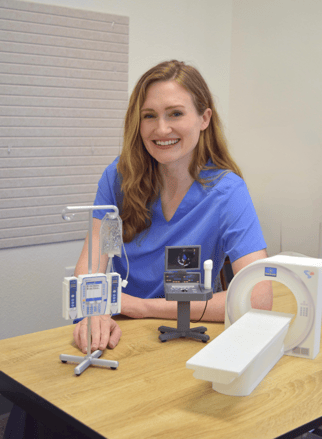
What Josie was playing with wasn’t an ordinary toy. The medical play set was created by Mary Jenner, a pediatric oncology nurse and founder of The Butterfly Pig.
Early in her nursing career, Mary cared for a three-year-old patient who struggled during blood draws. One morning, she tried something different.
The child was holding a teddy bear. Mary asked if she could place an IV in the bear first, then she showed the child what would happen during her own procedure. To Mary’s surprise, the child sat through her blood draw, and was even excited to participate in the same procedure as her teddy bear.
“It completely flipped the script. That’s when I realized we need more ways to connect with our young patients.”
Kids learn through play. Nurses the tools to build trust with their patients and educate them in a developmentally appropriate way.
This realization eventually led Mary to create toys that allow children to prepare for medical procedures and process their experiences. When kids can practice procedures that are happening to them, the fear of the unknown fades and medical trauma decreases.
Today, hospitals across the country use these tools. Early pilot programs have shown dramatic results, including major reductions in anxiety among pediatric patients.
But for Mary, the idea is about more than toys. It’s about empowering nurses to turn frontline insights into real solutions.
“Nurses are incredibly creative,” she said. “We’re always finding workarounds and innovating at the bedside.”
The Moments That Define Care
If you ask nurses what makes the biggest difference in healthcare, many won’t point to equipment or technology.
They’ll point to moments of compassion and care.
Mary calls them “micro moments” – the small, impactful interactions that happen hundreds of times a day: a reassuring tone of voice, a joke that makes a child laugh, letting a patient push the syringe themselves and be involved in their own care.
Sometimes, a nurse’s impact travels farther than they realize.
Josie has never met Mary. Yet the toys Mary created help Josie understand her treatment and process what she’s going through.
It’s a reminder that nursing extends beyond the bedside.
The Power of Nurses™
For McLaren, this experience has deepened her respect for her profession.
“Nurses go into this field because they care,” she said. “If there are gaps in care, it’s usually because they don’t have enough time or resources.”
But even within those challenges, nurses continue to show up, completing clinical work, building relationships, advocating for better care, and sometimes, creating entirely new solutions to help patients heal.
How has a nurse impacted your life? Share your story at ThePowerOfNurses.org.